Payroll in Mexico: What Companies Need to Know
Mexico • July 7, 2026 • Written by: Ongresso - Business Beyond Borders
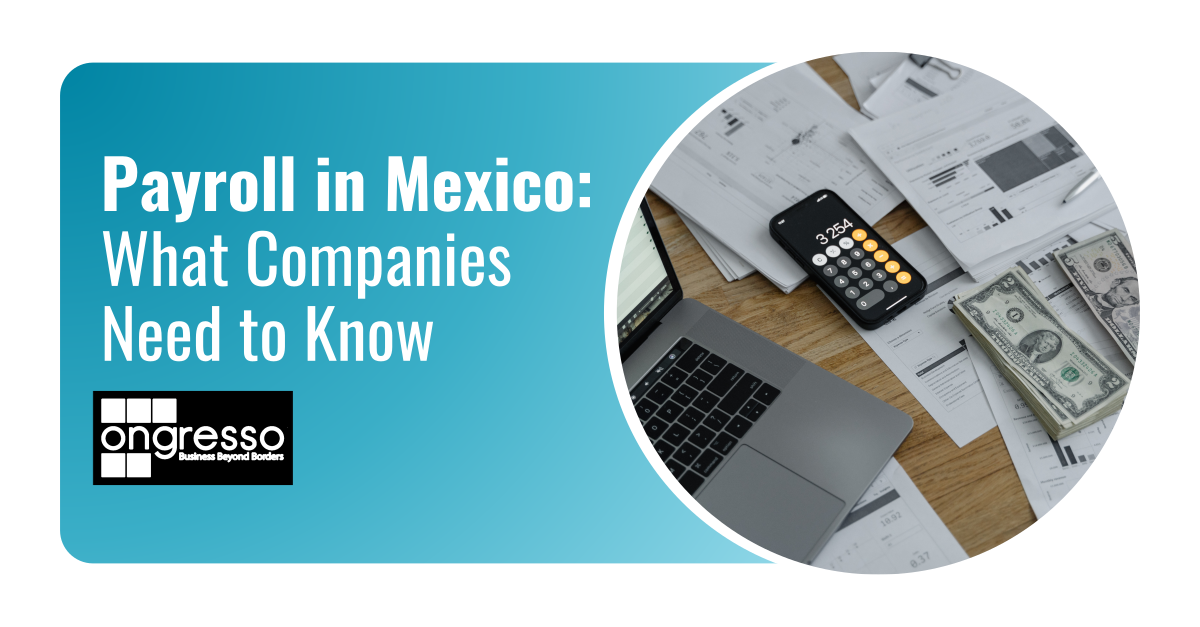
For foreign companies planning to hire employees Mexico, payroll is more than a monthly payment process. It connects labor rules, tax reporting, social security, employee documentation, accounting, and local HR administration.
Managing payroll in Mexico requires structure from the beginning. Companies need to understand how salaries, benefits, employee registration, payroll receipts, and statutory contributions interact before hiring or expanding local operations.
What does payroll in Mexico include?
Payroll in Mexico refers to the process of calculating, documenting, reporting, and paying employee compensation in accordance with local labor, tax, and social security requirements.
For foreign companies, this usually includes salary payments, income tax withholding, social security contributions, payroll tax documentation, employment records, benefits administration, and coordination with local authorities. Employers may also need to manage payroll receipts through Mexico’s electronic invoicing framework, known as CFDI, which is administered by the SAT.
Payroll is not an isolated finance task. It requires alignment between HR, legal, accounting, tax, and local operations. A payroll error can affect employee trust, tax records, social security reporting, and the company’s compliance position.
Why does Mexico payroll compliance matter in Latin America?
Latin America is not a single payroll environment. Each country has its own employment rules, tax systems, social security institutions, reporting processes, deadlines, and documentation practices.
In Mexico, employers must consider local labor conditions, registration obligations, statutory benefits, electronic payroll documentation, and social security processes. The IMSS provides employer registration procedures for companies or obligated parties that need to comply with social security obligations. This matters for international companies because payroll decisions often begin before the first employee is hired. The chosen structure, whether a local entity, employer of record model, or another compliant arrangement, can affect contracts, payroll reporting, benefits, tax treatment, and day to day HR management. Companies also need to evaluate subcontracting and specialized services rules when engaging third parties in Mexico. The STPS has addressed the framework for specialized services and REPSE registration, which can be relevant depending on the service model and operational structure.
Key aspects companies should consider before managing payroll in Mexico
- Employer structure. Before running payroll, companies need to define who the legal employer will be. This affects employment contracts, payroll registration, benefits, tax withholding, and responsibility before local authorities.
- Employee documentation. Contracts, employee data, role descriptions, salary terms, work location, and benefits should be organized before the first payroll cycle. Incomplete records can create operational and compliance risks.
- IMSS registration and social security. Employers must evaluate registration and reporting obligations with the Mexican Social Security Institute. These processes are central to Mexico payroll compliance and should be reviewed before employees begin work.
- Payroll receipts and CFDI. Payroll in Mexico is linked to electronic documentation. Employers should understand how payroll receipts are issued and validated through the SAT’s CFDI framework.
- Labor benefits and working conditions. Payroll calculations may involve salary, vacation, vacation premium, annual bonus, rest days, and other labor concepts. Mexico’s labor framework includes conditions such as working hours, rest days, vacation, salary, and aguinaldo.
- Tax withholding and reporting. Payroll must be aligned with tax obligations, including employee income tax withholding and accurate reporting. These rules may vary depending on the employee’s situation and the company’s structure.
- Local payroll calendars. Foreign companies should understand local payment practices, statutory deadlines, internal approval times, and reporting cycles. A payroll calendar helps reduce last minute errors.
- Cross functional coordination. Payroll requires input from HR, accounting, tax, legal, and operations. When these areas work separately, companies face higher risk of inconsistencies in contracts, payments, tax records, and employee files.
- Third party service providers. If using payroll services Mexico, companies should confirm the scope of service, responsibilities, documentation flow, data protection practices, and compliance alignment with the selected employment model.
How Ongresso can support companies managing payroll in Mexico
Ongresso supports international companies that need to enter, operate, and remain compliant in Latin America.
In Mexico, this means helping companies understand payroll requirements within the broader context of local employment, tax, accounting, legal, HR, and operational needs. Our role is to connect the moving parts. Payroll decisions should not be reviewed only from a payment perspective. They should also be assessed in relation to employment structure, social security, local documentation, employee onboarding, reporting obligations, and regional business goals.
For companies operating in multiple Latin American markets, Ongresso provides regional coordination with local execution. This helps headquarters work with a single regional partner while still addressing country specific requirements in Mexico, Colombia, Peru, Chile, Brazil, and other markets. Whether a company is preparing to hire its first employee in Mexico or reviewing an existing payroll process, Ongresso can help identify practical next steps, coordinate local specialists, and support a compliant operating structure.
Conclusion
Managing payroll in Mexico requires more than calculating salaries. It requires a clear employment structure, accurate documentation, social security coordination, tax alignment, and practical local execution.
For foreign companies, the strongest approach is to plan payroll before hiring, review local requirements carefully, and connect payroll with legal, tax, HR, accounting, and operational decisions. With the right structure, companies can hire in Mexico with greater clarity and support their regional growth in Latin America.
Need support expanding into Latin America? Contact Ongresso to speak with a regional expansion specialist.
FAQs
What is payroll in Mexico?
What should foreign companies know before hiring employees in Mexico?
Foreign companies should define the employment structure, prepare compliant documentation, understand social security registration, review tax withholding obligations, and confirm how payroll receipts will be issued.
Why is Mexico payroll compliance important?
Mexico payroll compliance helps companies reduce labor, tax, accounting, and operational risks. It also supports accurate employee records, timely payments, and alignment with local authorities.
Can a foreign company run payroll in Mexico without a local entity?
This depends on the employment model, business structure, and local requirements. Companies should review whether they need a local entity, an employer of record arrangement, or another compliant structure before hiring.
What are payroll services Mexico used for?
How can Ongresso help with payroll in Mexico?